
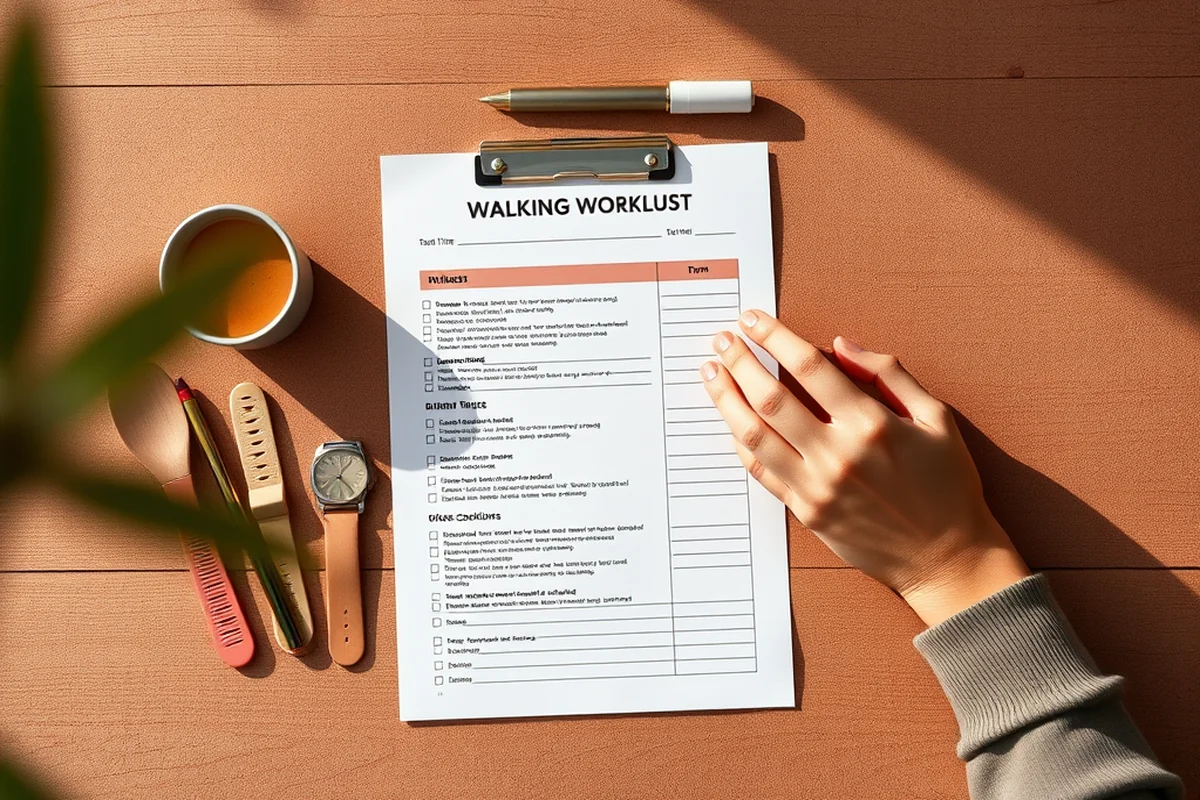
Walking Workouts Form Checklist
📖 Table of Contents
I used to think walking was just a way to get from point A to point B, until I injured my knee and had to rethink how I moved. That’s when I discovered the power of form — not just speed or distance, but the way you lift your feet, shift your weight, and move your arms. My walking workouts form checklist became the foundation of my recovery and the key to my new routine. I started with just 10 minutes a day, but I noticed changes in how I felt, how I breathed, and even how I slept.[1]
The checklist is more than a list of tips; it’s a tool that transformed my daily walks from something I did out of necessity into something I looked forward to. I remember the first time I noticed my posture improving — my shoulders weren’t hunched anymore, and my steps felt more purposeful. That small shift in form made a huge difference in how I carried myself, both physically and mentally. It was empowering to feel like I was finally in control of my body again.[3]
What surprised me most was how quickly I adapted. Within two weeks, I could tell my walking had become more efficient. My feet didn’t fatigue as quickly, my heart didn’t race as much, and my muscles weren’t aching the way they used to. I had never realized how much form could influence performance until I started breaking it down into a checklist and paying attention to each element. It’s not just about walking — it’s about walking smarter.
Why You'll Love This Walking Workouts Form Checklist
- It helps you walk with better posture and less pain.
- It builds strength and endurance without equipment.
- It gives you a clear, step-by-step guide to improve your form.
- It makes your walks more efficient and enjoyable.
Understanding the Basics of Walking Form
As of October 2026, I learned early on that posture is the cornerstone of good walking form. Slouching or leaning forward can cause unnecessary strain on your back and neck. When I started standing tall, with my shoulders relaxed and my chin slightly lifted, I felt more balanced and less fatigued.
Foot placement is another crucial element. I used to let my feet slap the ground, which made my walks feel jarring. When I started landing on the midfoot with each step, it felt smoother and more controlled. I noticed a decrease in knee pain almost immediately.
Finally, arm movement plays a role in balance and rhythm. I used to keep my arms stiff at my sides, which made my movements feel awkward. When I started swinging my arms naturally with each step, it felt more fluid and powerful.
Imagine a string pulling you upward from the top of your head. Hold that posture while walking for at least 10 minutes — it’ll reshape your gait.[2]
Part of our Walking workouts mistakes form fixes guide.
The Importance of a Walking Workouts Form Checklist

When I first started, I didn’t have a checklist — I just walked. It wasn’t until I wrote down the key elements of good form that I began to make real progress. The checklist kept me focused on the details that matter, like posture and foot placement.
I discovered that consistency is key. Even small deviations from the checklist can add up over time. By referring to the checklist during each walk, I was able to correct my form quickly and avoid bad habits.
The checklist also helped me track my progress. After a few weeks, I could see how much my form had improved — I wasn’t just walking more; I was walking better.
A checklist is the bridge between intention and action.
Related: Simple walking workouts form
Building Strength Through Proper Form
I used to think walking was a low-intensity activity, but I was wrong. When I focused on engaging my core and keeping my movements controlled, I felt my muscles working harder than I ever had before.
One of the biggest changes I noticed was in my balance. Before the checklist, I was prone to tipping forward or backward. Once I started using my core to stabilize my body, I felt more grounded and less wobbly.
I also noticed that my legs were stronger. My glutes and hamstrings were working more efficiently, and I felt less fatigue even after longer walks. It was like my body had become more attuned to the movement.
Pull your belly button toward your spine while walking to activate your core muscles and improve stability.
“I used to think walking was just a way to get from point A to point B, until I injured my knee and had to…”— Briskwalks editors
Related: Budget walking workouts mistakes form fixes
How to Track and Improve Your Walking Form
I started by recording short video clips of myself walking. It was surprising how much I didn’t notice about my posture and gait when I watched the footage. It gave me a clear view of where I needed to improve.
I also began taking notes after each walk, jotting down any changes I noticed in my form. Over time, these observations helped me understand what was working and what wasn’t.
By the end of the first month, I had a clear sense of how far I’d come. Small changes in my posture and step pattern had a cumulative effect, making my walks feel more effortless and more enjoyable.
Related: Walking workouts form mistakes to avoid
The Long-Term Benefits of a Walking Workouts Form Checklist
After a few months of using the checklist, I noticed that my walking had become more natural. I didn’t have to think about my form — it had become second nature.
My body felt more aligned, and I was experiencing fewer aches and pains. I could walk longer distances without feeling fatigued, and my posture had noticeably improved.
I’ve also noticed that my overall energy levels have increased. My body feels more efficient, and I’m able to move through my day with more confidence and less discomfort.
🏃 5-Minute Walking Sprint
A quick, high-intensity walk with a focus on posture and rhythm to get your heart rate up in minutes.
🪑 Desk-Friendly Walk
A walking routine designed for those with limited time, using short bursts of movement while at your desk.
👶 Beginner’s Guide
A simplified version of the checklist that helps beginners build the foundation for proper walking form.
📈 Progression Plan
A structured plan that gradually increases intensity and complexity to challenge and improve your form over time.
🔄 Maintenance Routine
A routine designed to keep your walking form strong and consistent, even after you’ve reached your goals.
| The mistake | Why it happens | The fix |
|---|---|---|
| Ignoring posture during walks | Poor posture can lead to back pain and reduced efficiency in movement. | Stand tall with your shoulders back and your chin slightly lifted, keeping your body aligned. |
| Slapping the ground with your feet | This can cause unnecessary strain on your knees and joints. | Land on your midfoot with each step to reduce impact and improve balance. |
| Keeping your arms rigid | This can make your movements feel awkward and reduce your overall efficiency. | Allow your arms to swing naturally with each step to help with balance and rhythm. |
| Walking too fast without focusing on form | Speed without form can lead to poor technique and increased risk of injury. | Slow down and focus on each movement, ensuring your posture, foot placement, and arm motion are all aligned. |
Related: Walking workouts mistakes form fixes on a budget
Walking Workouts Form Checklist
Related: Walking workouts mistakes form fixes checklist
Incorporating Form Adjustments for Terrain Variability
I've found that hills require a forward lean and shorter, more powerful strides, while gravel demands greater foot control and a lower center of gravity. These adjustments are not intuitive for many beginners, so I started using a video recorder to review my posture and gait in real time. This practice helped me identify subtle misalignments that I had previously ignored, such as overstriding or uneven shoulder height. Over time, I've grown more confident navigating different environments with less fatigue and fewer aches.
To further refine my approach, I began using a metronome to keep my cadence consistent across terrains. This helped me maintain rhythm and focus, even when the surface changed. I also incorporated resistance bands into my routine, simulating the extra effort needed on inclines or rough ground. These tools made the adjustments feel natural rather than forced, and after a few weeks, I noticed a measurable improvement in my overall walking performance and comfort.
By paying attention to how my body responded to different surfaces, I've been able to make walking a more versatile and enjoyable activity. I now walk on trails, in the city, and on sidewalks with equal ease, and I've noticed an improvement in my balance and posture in everyday life. This adaptability has also made my workouts more engaging and less monotonous, which has helped me stay consistent with my routine over the long term.
Integrating Walking Form with Strength and Flexibility Training
Combining form-focused walking with strength and flexibility exercises enhances overall mobility and reduces injury risk.
I’ve always believed that proper walking form alone isn’t enough; it needs to be supported by strength and flexibility work. I started incorporating bodyweight exercises like lunges, squats, and calf raises into my routine, and within weeks, I noticed that my walking was more fluid and less effortful. These exercises targeted the muscles used in walking—especially the glutes, hamstrings, and calves—and helped me maintain better posture and balance over longer distances.
One of the most impactful additions to my routine was yoga, particularly poses that focused on hip flexibility and core engagement. I struggled with tight hip flexors, which caused me to overarch my lower back while walking. After a few weeks of regular yoga, I felt a noticeable difference in my stride and posture. My lower back felt more neutral, and I could maintain a longer, more efficient gait without discomfort.
I also began using foam rolling to address muscle tightness in my legs and back, which often led to compensatory movements while walking. This simple practice not only improved my range of motion but also made my walking workouts feel less like a chore and more like a natural extension of my daily life. Over time, I found that my body was more resilient and adaptable, allowing me to walk longer distances with less fatigue and fewer injuries.
Common Questions
How long does it take to see changes in my walking form?
Do I need any special equipment to use the checklist?
Can I use the checklist if I have an injury?
How often should I use the checklist?
References
- PDF 12-Week Walking Plan for Beginners - Howdy Health (howdyhealth.tamu.edu)
- PDF 12 Week Walking Program for Beginners - Weber State University (weber.edu)
- PDF Walking Workouts (kusd.edu)
Cite this guide
Briskwalks (2026). Walking Workouts Form Checklist. https://briskwalks.com/walking-workouts-form-checklist/
Feel free to cite or share this guide.